
Zhejiang's Hidden Giant: 9.6 Billion Yuan in Six Months Selling Beverage Bottles
 In one month, the number of shareholders in the A-share listed company Wankai New Materials grew by 72.04%. Many people may be unfamiliar with this company, but in fact they have long been indirectly buying its products. By supplying beverage bottles to brands such as Nongfu Spring and Coca-Cola, it has grown into a hidden giant. In the first half of this year, the company's revenue surged by over 17%, while its net profit attributable to shareholders soared by 910%.
1. Revenue of over 9.6 billion yuan in half a year
Nongfu Spring, Coca-Cola, C'estbon, Wahaha... these beverage brands are everywhere and have almost become daily necessities of life. However, few people know that behind these beverage giants lies another hidden giant.
This company is called Wankai New Materials. Ordinary consumers may never have heard of it, but it has already become a listed company, and many people indirectly consume its products. That's right—it is the supplier of the "plastic bottles" packaging for these beverage giants. It can be said that its products are as ubiquitous as the beverage brands themselves. When you consume a beverage, you are likely also consuming this company's PET packaging.
Wankai New Materials is headquartered in Haining, Zhejiang—a county-level city under the province, administered by Jiaxing. Its core business is bottle-grade PET, i.e., food packaging material, with typical downstream applications including beverage bottles, cooking oil bottles, and daily chemical packaging bottles... It permeates daily life.
Recently, the quietly-profitable Wankai New Materials has drawn broader attention in the capital market thanks to its explosive results.
According to financial report data, in the first half of 2026, Wankai New Materials achieved operating revenue of 9.652 billion yuan, up 17.52% year-on-year; net profit attributable to shareholders of 562 million yuan, up about 910% year-on-year; and net profit attributable to shareholders excluding non-recurring items of 346 million yuan, up 971.52%.
Despite the explosive performance, few people understand this hidden giant, and its helmsman Shen Zhigang rarely appears in public. So the company sounds somewhat mysterious. In fact, the story begins with a Zhejiang man who "would rather sleep on the floor than not be his own boss," starting his business with just two shuttle looms.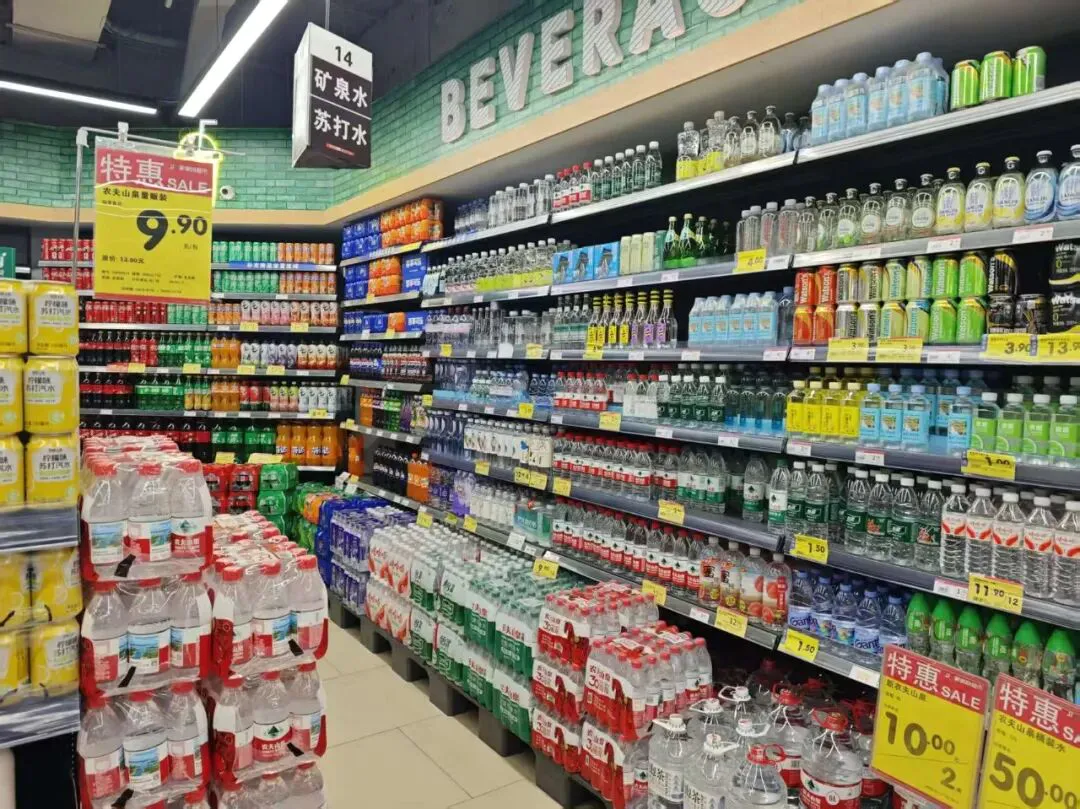
In the 1990s, Shen Zhigang, who was unemployed, saw people all around him weaving and selling fabric, and figured that if others could do it, so could he. Relying on his experience as a machine repairman, he bought two shuttle looms, set up a small workshop, and began his entrepreneurial journey. By 1997, Shen Zhigang already owned 32 shuttle looms. That year, Hangzhou Shenda Chemical Fiber Co., Ltd. was established.
This was the predecessor of Zhengkai Group. Zhengkai Group is the controlling company of the listed Wankai New Materials.
Born in 1974, Shen Zhigang is a native of Xiaoshan, Hangzhou. Xiaoshan is an important national base for the chemical fiber industry. Since the reform and opening up, because the threshold for entering the textile industry was low, family workshops and small textile factories sprang up everywhere, and a textile industry cluster formed in the Xiaoshan and Shaoxing areas. Riding the fast train of regional economic development, Shen Zhigang quickly made his first fortune.
As competition intensified, some companies began to extend into the upstream chemical fiber raw material segment and actively explore the international fabric market. Shen Zhigang did the same, leading his company to continuously expand its business—and thus Zhengkai Group came into being.
By 2006, Zhengkai Group had become a privately owned enterprise group integrating textiles, trade, real estate, and investment. Two years later, having reached a certain scale, Zhengkai Group moved beyond Hangzhou and also developed new business.
In 2008, Shen Zhigang crossed the river from Xiaoshan to Haining, originally planning to invest in a new textile chemical fiber project there. However, under the impact of the financial crisis, the outlook for the textile industry was unclear. Fortunately, during the investigation, he discovered that the food packaging market had strong demand and was relatively less affected by the economic situation, so he resolutely abandoned the original plan. The new factory instead pivoted into the PET industry.
Wankai New Materials (formerly Zhengkai Differential Fiber Co., Ltd. and Wankai Co., Ltd.), invested in and established by Zhengkai Group, followed soon after.
Shen Zhigang's brother-in-law Xiao Haijun also started the business with him. From the early Zhengkai Group to the later Wankai New Materials, Xiao Haijun has held key positions throughout. Currently, Shen Zhigang is Chairman of Wankai New Materials, and Xiao Haijun is Vice Chairman and General Manager.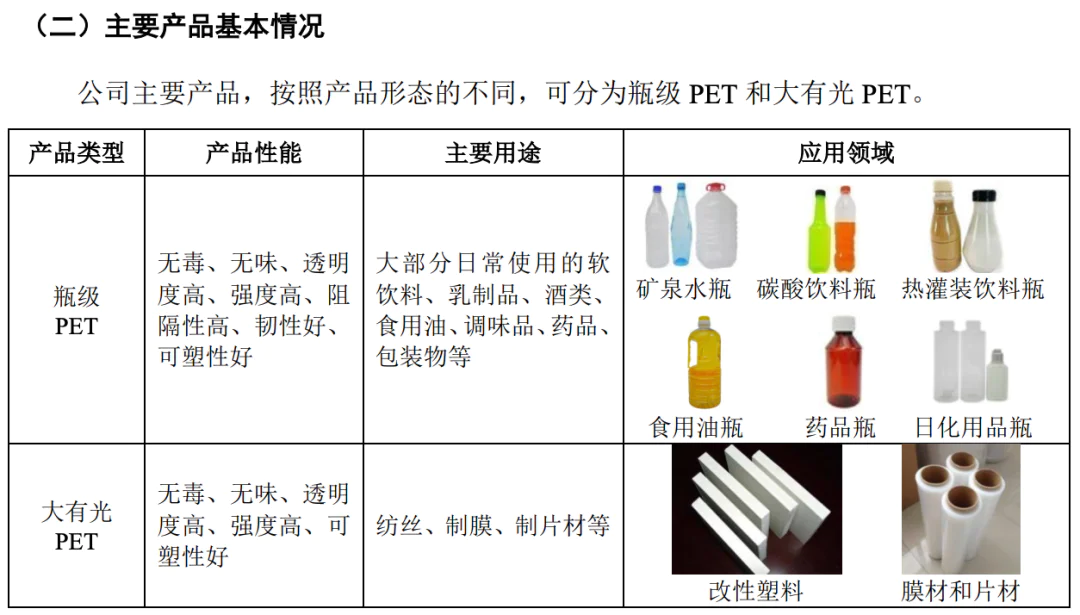
Recalling the founding of Wankai New Materials, both Shen Zhigang and Xiao Haijun were especially excited, but also admitted that they "saw a lot of cold looks."
The Jiaxing Daily once reported that during that period, Shen and Xiao were very excited, two outsiders diving in personally. Facing an unfamiliar field, they led the founding team and experts recruited at high salaries to repeatedly work on a single production line. To encourage employee innovation, Shen Zhigang also unveiled a highly attractive killer move: bonuses "with no upper limit."
Making bottle-grade PET required not only overcoming product challenges but also, crucially, finding large downstream customers.
How to break into the market? "As a little-known privately owned small company, we were facing big customers like Wahaha, Coca-Cola, and Nongfu Spring. Becoming a supplier of packaging for these brand-name beverages was harder than reaching the heavens," Shen Zhigang said. He could no longer remember how many "closed doors" they encountered back then.
It wasn't until two years later that Wankai New Materials finally secured orders from a major manufacturer. "They called us specially to say that, after months of repeated testing, our packaging stood out for its stability," Xiao Haijun said.
In March 2022, Wankai New Materials went public (IPO). In the year of listing, the company's revenue scale doubled, approaching 20 billion yuan.
Wankai New Materials stated in its prospectus that it has bottle-grade PET capacity of 1.8 million tons per year, ranking among the world's leading capacities, and that its main customers have expanded to include many well-known domestic and international food and beverage giants such as Nongfu Spring, Coca-Cola, C'estbon, Wahaha, Master Kong, and Danone.
In the first half of 2026, thanks to upstream supply-side optimization, strong support for selling prices, domestic demand recovery, and peak-season drivers, Wankai New Materials achieved explosive growth amid industry cycle changes. In early May, Wankai New Materials' stock price reached a stage high, with total market capitalization at one point nearing 18 billion yuan.
As a result, Shen Zhigang's wealth at that time also hit a new high, with his stock holdings valued at over 6.7 billion yuan. As of August 31, the number of shareholders of Wankai New Materials surged by 72% to a new high of 41,500 households.
2. A business of "large volume, thin margins"
Wankai New Materials' core business is bottle-grade PET, which accounts for about 96% of revenue; bright-grade PET products account for only about 2%. Bottle-grade PET is mainly used for food and beverage packaging and the like. Bright-grade PET, in plain terms, is PET produced with almost no matting filler, so the finished product naturally has high transparency and high gloss, with downstream uses including film making and spinning.
This product structure places Wankai New Materials in a strongly cyclical track.
"PET" stands for polyethylene terephthalate, a synthetic polymer material belonging to the family of polyester thermoplastic plastics. Bottle-grade PET is also called polyester bottle flakes. Its main raw materials are purified terephthalic acid (PTA) and monoethylene glycol (MEG), of which the source of PTA is crude oil, while MEG has both petroleum-based and coal-based process routes. Therefore, its price fluctuates with international oil prices and petrochemical capacity cycles.
PET bottle flake capacity has the capital-intensive attribute of "concentrated construction, concentrated release." Industry concentration is high, and every round of capacity expansion may break through the industry's profit line; afterwards, through capacity reduction such as output cuts and shutdowns, profits are gradually repaired.
Being in a strongly cyclical, capacity-driven bulk chemical industry with extremely high product homogeneity, there is no brand premium to speak of. Although the giants have large revenue scale, their profits are thin and rise and fall sharply. Therefore, this is not a "very sexy" track.
This industry has a core profitability indicator called the processing spread, which is the bottle flake selling price minus raw material cost. In short, what Wankai New Materials earns is essentially a processing fee.
Since going public, Wankai New Materials' results have fluctuated greatly, and high growth is not sustainable. In 2024, the company even posted a net loss of 300 million yuan despite revenue exceeding 17.2 billion yuan, because new industry capacity was released rapidly, supply was oversupplied, competition intensified, and the spread hovered at low levels, causing losses in its main business. In 2024, Wankai New Materials' gross margin was only 0.86%.
In 2025, amid deep market adjustment and the "anti-involution" drive, the bottle flake industry gradually reduced output and became self-disciplined, supply and demand recovered, mainstream companies actively controlled capacity, and processing fees rebounded slightly. In addition, as an industry giant, Wankai New Materials finally returned to profitability by controlling costs and grasping the rhythm of procurement and sales.
In 2025, Wankai New Materials achieved operating revenue of 15.494 billion yuan, down 10.08% year-on-year; net profit attributable to shareholders of 169 million yuan, up 156.37% year-on-year; a gross margin of 3.48%, up 2.62 percentage points; and a net margin of 1.08%, up 2.83 percentage points. In the first half of 2026, performance took a big turnaround.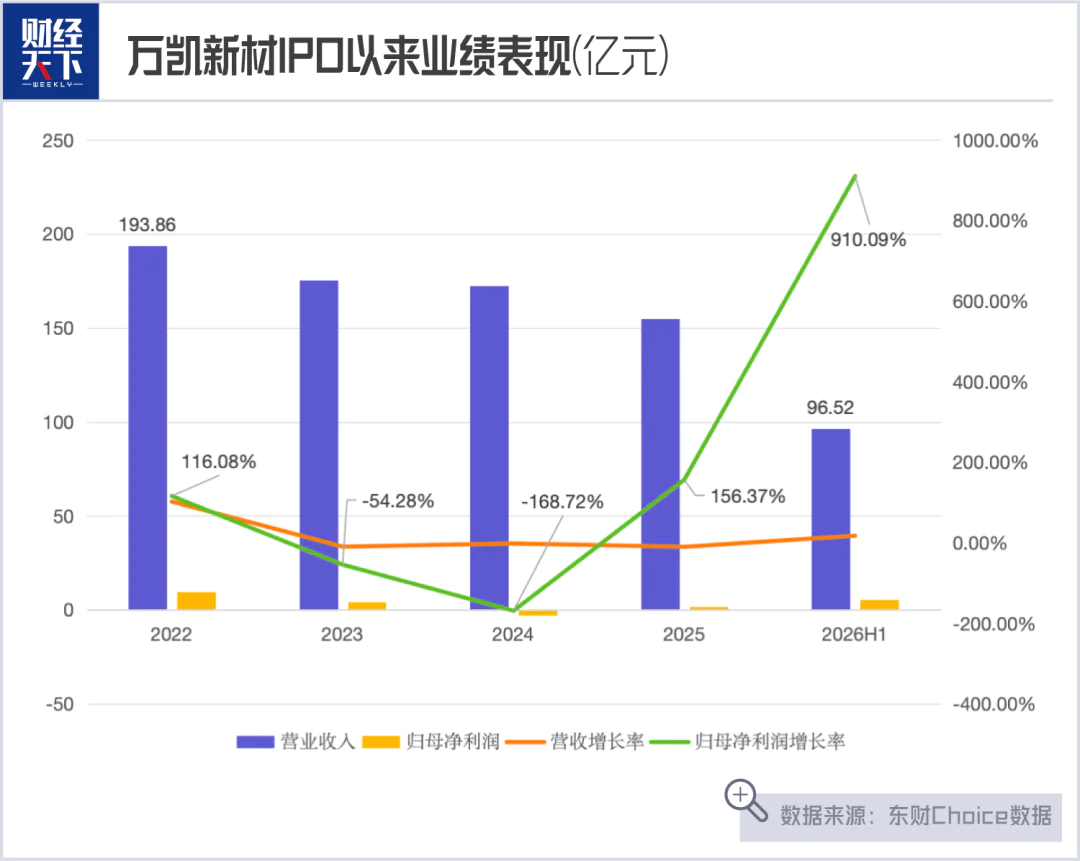
However, judging from the net profit excluding non-recurring items, which better reflects the true profitability of the main business, in 2025 Wankai New Materials achieved 42 million yuan, and in the first half of 2026, 346 million yuan—both far below net profit. Essentially, this is still a thin-margin business.
The biggest cost of a bottle of drinking water is not the water, but the packaging. In Nongfu Spring's costs, raw materials and packaging account for the largest share. Nongfu Spring's prospectus shows that packaging materials such as PET, cartons, labels, and shrink film account for about 63% of its cost of sales, of which PET alone accounts for nearly 32%, making it the largest cost item.
However, the beverage industry can tell stories of "water sources," "nature's courier," and "zero sugar," and enjoys brand premiums with very high margins—for example, Nongfu Spring's gross margin is consistently maintained at around 60%, and its net margin around 30%. Therefore, fluctuations in packaging material prices have little impact on its performance, and the high gross margin of the main business more easily dilutes cost volatility.
As a "Zhejiang fellow townsman" of Nongfu Spring and Wahaha, Wankai New Materials is different: its profits are as thin as paper, and cyclical fluctuations in raw material prices and industry capacity will significantly affect its performance—sometimes delivering high growth, sometimes generating losses.